


Introduction
What if your business could scale instantly, reduce IT costs, and improve performance—all at the same time? That’s exactly what cloud migration services promise in today’s fast-paced digital world.
As companies increasingly rely on data, applications, and digital infrastructure, moving from traditional on-premise systems to the cloud has become more than just a trend—it’s a necessity. Cloud migration services help organizations transition smoothly, ensuring minimal disruption while unlocking powerful capabilities.
In an era where agility, security, and scalability define success, understanding cloud migration is crucial for businesses of all sizes.
What is Cloud Migration Services?
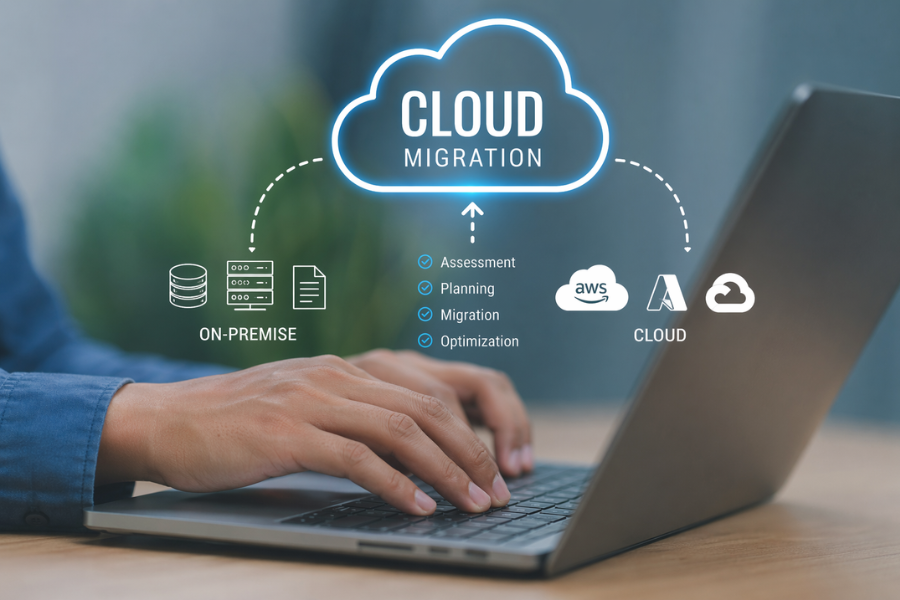
Cloud migration services refer to the process of moving data, applications, and IT resources from on-premise infrastructure (or one cloud environment) to a cloud-based platform such as AWS, Microsoft Azure, or Google Cloud.
This process can involve:
- Transferring entire systems
- Moving specific workloads
- Upgrading legacy applications
The concept gained momentum in the early 2010s as cloud computing matured and businesses started seeking flexible, cost-effective alternatives to traditional IT systems.
Key Features / Components
Cloud migration services typically include several essential components that ensure a seamless transition:
1. Assessment & Planning
- Evaluating current infrastructure
- Identifying migration goals
- Choosing the right cloud model (public, private, hybrid)
2. Data Migration
- Secure transfer of data to the cloud
- Ensuring data integrity and minimal downtime
3. Application Migration
- Rehosting (lift-and-shift)
- Refactoring or re-architecting applications
4. Security & Compliance
- Data encryption
- Regulatory compliance (GDPR, HIPAA, etc.)
- Identity and access management
5. Testing & Validation
- Ensuring systems function correctly post-migration
- Performance and security testing
6. Ongoing Management & Optimization
- Monitoring cloud performance
- Cost optimization
- Scaling resources as needed
How It Works
Cloud migration follows a structured, step-by-step approach to ensure success:
Step 1: Discovery
Organizations analyze their current IT environment, including applications, databases, and dependencies.
Step 2: Strategy Development
A migration strategy is selected, such as:
- Rehosting (moving as-is)
- Replatforming (minor changes)
- Refactoring (major redesign)
Step 3: Preparation
- Setting up cloud infrastructure
- Configuring security protocols
- Creating backups
Step 4: Migration Execution
- Data and applications are transferred
- Tools and automation are often used to speed up the process
Step 5: Testing
- Systems are tested for functionality, performance, and security
Step 6: Optimization
- Fine-tuning performance
- Reducing costs
- Improving scalability
Applications / Real-World Uses
Cloud migration services are used across various industries to enhance operations:
1. Business & Enterprises
- Migrating enterprise resource planning (ERP) systems
- Enabling remote work environments
- Improving collaboration tools
2. Healthcare
- Storing and managing electronic health records (EHR)
- Supporting telemedicine platforms
- Ensuring secure patient data access
3. E-commerce
- Handling high traffic during sales events
- Scaling inventory and payment systems
- Enhancing customer experience
4. Finance & Banking
- Real-time transaction processing
- Fraud detection using cloud-based analytics
- Secure data storage
5. Education
- Online learning platforms
- Cloud-based student management systems
- Virtual classrooms
Benefits / Advantages
Cloud migration offers several compelling benefits:
- Cost Efficiency
Reduces the need for expensive hardware and maintenance - Scalability
Easily scale resources up or down based on demand - Improved Performance
Faster processing and reduced latency - Enhanced Security
Advanced security features and compliance tools - Business Continuity
Built-in backup and disaster recovery solutions - Flexibility & Accessibility
Access systems from anywhere, anytime
Challenges / Limitations
Despite its advantages, cloud migration comes with certain challenges:
- High Initial Costs
Migration can require significant upfront investment - Complexity
Large-scale migrations can be technically challenging - Downtime Risks
Potential disruptions during migration - Data Security Concerns
Risk of data breaches if not handled properly - Vendor Lock-In
Difficulty switching providers later - Skill Gaps
Need for trained professionals and expertise
Latest Trends & Innovations (Important)
Cloud migration is evolving rapidly, with new trends shaping the future:
1. Multi-Cloud Strategies
Organizations are using multiple cloud providers to avoid vendor lock-in and improve reliability.
2. AI-Powered Migration Tools
Artificial intelligence is being used to automate migration processes, reduce errors, and optimize workloads.
3. Serverless Computing
Businesses are adopting serverless architectures to simplify deployment and reduce costs.
4. Edge Computing Integration
Combining cloud with edge computing for faster data processing and lower latency.
5. Cloud-Native Development
More companies are building applications specifically designed for the cloud rather than migrating legacy systems.
6. Enhanced Security Models
Zero Trust Architecture and advanced encryption techniques are becoming standard.
Future Outlook
Over the next 5–10 years, cloud migration services will become even more sophisticated and essential. Businesses will increasingly adopt hybrid and multi-cloud environments to balance flexibility and control.
Automation and AI will play a bigger role, making migrations faster and less risky. Additionally, industries like healthcare, finance, and manufacturing will continue to rely heavily on cloud technologies for innovation and efficiency.
As digital transformation accelerates globally, companies that embrace cloud migration early will have a significant competitive advantage.
Conclusion
Cloud migration services are transforming how businesses operate by enabling scalability, efficiency, and innovation. From improving performance to reducing costs, the benefits are clear—but success depends on proper planning and execution.
While challenges exist, the long-term advantages far outweigh the risks. As technology continues to evolve, cloud migration will remain a cornerstone of modern IT strategy.
Organizations that invest in the right migration approach today will be better prepared for the digital future ahead.